Uncover Fraud. Get Paid by the Government.
Do you have strong evidence of fraud against the state?
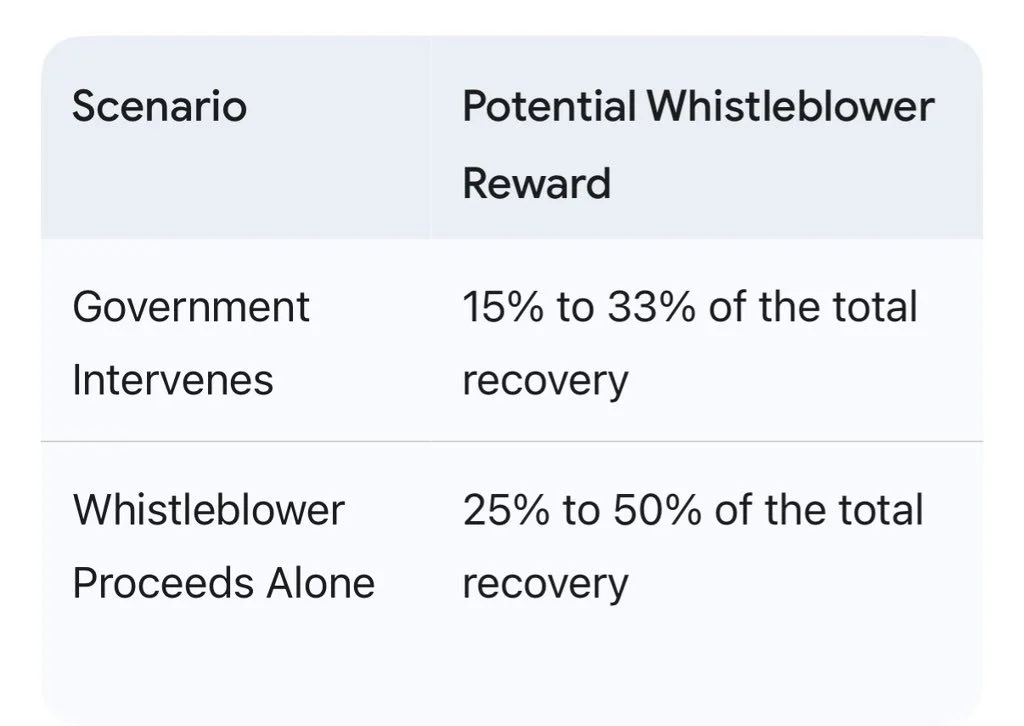
Qui tam is a legal provision that allows a private individual (known as a relator) to file a lawsuit on behalf of the government to recover funds lost to fraud.
The term comes from the Latin phrase qui tam pro domino rege quam pro se ipso in hac parte sequitur, meaning "he who brings the action for the king as well as for himself."
In California for example, these actions are primarily governed by the California False Claims Act (CFCA), which is modeled after the federal version but tailored to protect state and local taxpayer money.
Areas of Focus
Procurement Fraud
Ex: Bidders collude to rig auctions by allocating contracts among insiders (bid rotation), submitting sham low bids knowing they'll claim change orders later, or supplying defective goods (e.g., faulty safety gear to prisons).
Healthcare
Ex: Providers defraud Medi-Cal by submitting inflated bills for non-existent services, upcoding routine procedures to higher-reimbursement codes (e.g., billing a simple office visit as surgery), or falsifying patient records to qualify for reimbursements.
Contractor Fraud
Ex: Contractors on state-funded projects cheat by substituting cheap, substandard materials (e.g., using inferior concrete in bridges), exaggerating labor hours via fake timesheets, or ghost employees who never worked the site.
Grant & Education Fraud
Ex: Institutions misuse grants by diverting funds to unrelated expenses, inflating administrative costs, or fabricating research results to secure ongoing funding from state agencies.